There is a specific kind of glitch that only shows up in the logs if you know what a clean run is supposed to look like. December 1948 was that kind of glitch. The sky over New Mexico did something that did not match the expected behavior. The people tasked with identifying the anomaly could not. The conclusion field came back empty.
Not UNIDENTIFIED. Not INSUFFICIENT DATA. Not ASTRONOMICAL. Empty. A null return where an answer was supposed to go.
The file is Case #6791889, Kirtland AFB, New Mexico. One hundred and thirty-five pages. Multi-agency. Multi-week. Multi-site. And at the end of all of it, a blank box where the answer was supposed to go.
What People Saw
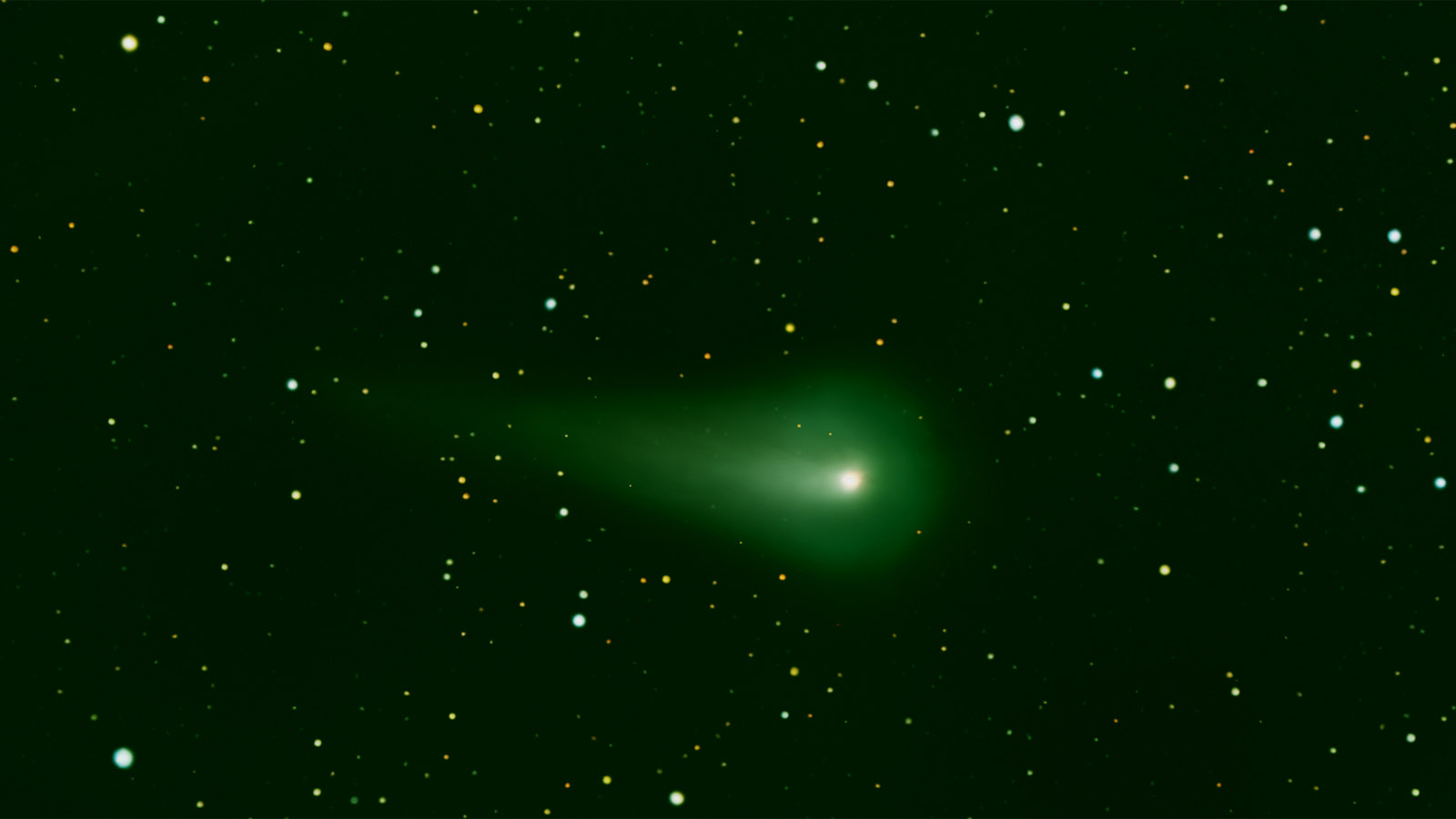
Beginning on or around December 5, 1948, observers across central New Mexico began reporting the same thing: a brilliant green ball of light, round, roughly the diameter of a full moon in apparent size, moving horizontally and fast and low across the sky. Not a streak. Not a flash. A ball — green, vivid, traveling east to west, appearing and disappearing in seconds. Some reports noted a red or orange flash at one end. Most noted total silence.
The cover card on the file summarizes it simply: “Brilliant green light, beginning or ending with a red or orange flash. Red and trailing lights. Round shape. Size 9, diameter of full moon. Horizontal flight path. Altitude between 6 and 10 miles. No sound.”
Military pilots saw them. Atomic Energy Security Service inspectors saw them. Civilians saw them. And on the night of December 12, riding as a passenger in a staff car near Bernal, New Mexico, the director of the Institute of Meteoritics at the University of New Mexico saw one too.
They Called the Right Guy. He Was Already Watching.
Lincoln LaPaz was not a name the Air Force picked at random. He was arguably the foremost meteor and meteorite scientist in the United States. Tracking, triangulating, and classifying fireballs was the work of his professional life. If anyone in 1948 could look at a bright object in the night sky and tell you exactly what it was, it was LaPaz.
He had been systematically watching the New Mexico sky since December 9th, because he had already been briefed on the reports and found them, in his own word, “unusual.” When the December 12 object crossed in front of the car he was riding in — visible for 2.1 to 2.3 seconds, east to west, low and brilliant and green — he had both the training and the presence of mind to time it, mark his position, and calculate the geometry afterward.
His December 20 memo to Colonel Doyle Rees runs through six specific reasons why these objects could not be meteors or meteorites:
- Horizontal trajectory. Genuine meteors almost never travel horizontal paths. These did, consistently.
- Altitude 8-10 miles. Meteors become visible at 40+ miles up. Something at 8-10 miles is not behaving like a meteor.
- Velocity 3-12 miles per second. Too slow for meteors, too fast for any known conventional aircraft or V-2 rocket of the era.
- No sound. A genuine meteorite penetrating to 8-10 miles altitude invariably produces violent noise. Every witness reported silence.
- Instant full brightness. Meteors show gradual brightening from a hairline to a flare. These appeared at full intensity immediately.
- No trail. No sparks. No dust cloud. No debris signature of any kind.
His conclusion, committed to official memorandum and addressed to a colonel in the United States Air Force:
“The writer remains of the opinion that the fireball of December 12 was definitely non-meteoric and that in all probability the same is true of most, if not all, the other bright green fireballs which the OSI has had under investigation.”
— Lincoln LaPaz, December 20, 1948
Definitely non-meteoric. From the meteor scientist. Who watched it himself.
The Geography Is Not Subtle
Look at where these events happened. Kirtland Field: nuclear weapons storage and delivery. Sandia Base: bomb assembly and engineering. Los Alamos: bomb design and physics. Holloman AFB: the test range. In December 1948 these were the four operational nodes of the American nuclear weapons program, and the green lights were moving between them.
One can argue this reflects observer density — those installations had the most technically trained people watching the sky, so naturally they filed the most reports. The investigators noticed the clustering too. They do not offer that explanation in the file. What they do offer is 135 pages of documented interviews, triangulation data, technical analysis, and secondary phenomena — including unexplained aerial sounds at Los Alamos security stations on December 30 that were heard at three separate checkpoints and could not be attributed to any aircraft, machinery, or known source.
The FBI is in this file. Special Agent Charles Naffziger is named. The investigation reached FBI counterintelligence channels. In late 1948 that means one thing: somebody was wondering if the green lights were Soviet.
The file does not answer that question either.
The [Blank]
UNIDENTIFIED, as a classification, is a statement. It says: we investigated, we compared against everything we know, and we are formally declaring that we do not know what this was. It closes the loop even when the answer is “no answer.”
A blank field is something else. A blank field is a loop that was never closed. A process that ran, compiled a 135-page output, forwarded that output up through the chain of command to Air Materiel Headquarters — and then stopped without writing anything in the box.
The debugger flagged an undefined behavior. The undefined behavior was never defined. The case was filed and eventually declassified and eventually digitized and eventually added to the public archive, blank evaluation field intact, sitting in the 1940s folder with all the other cases that at least got an answer written down.
Green lights. Horizontal. Silent. Low over the nuclear weapons complex. Seen by the nation’s leading meteor scientist who concluded they were not meteors. Investigated by the Air Force, the OSI, the AESS, and the FBI. Forwarded up the chain. Left blank.
This is what a reality glitch looks like in the government record.
Read the file. All 135 pages are in the GlitchyMatrix Project Blue Book Archive. Search for all the [Blank] cases, or go straight to this one:
Case #6791889 — Kirtland AFB — December 1948 — [Blank] — GlitchyMatrix Project Blue Book Archive
All 10,808 declassified USAF UFO case files, 1945-1969. The ones with answers. The ones without. And the ones like this one, where someone left the answer field empty and moved on.